
Compiled and edited by Ac. Shambhushivánanda Avt.
P.R. Sarkar Institute of Indology, Anandanagar, Bengal, India
Evidence of an ancient “lost river civilization” was uncovered off the west coast of India in 2001. Local archaeologists claim the find could push back the currently accepted dates of the emergence of the world’s first cities.1 Underwater archaeologists at the National Institute of Ocean Technology (NIOT) first detected signs of an ancient submerged settlement in the Gulf of Cambay, off the coast of Gujarat, in May 2001.2 If confirmed, the find would also push back the date of India’s earliest known civilization by 5000 years. The Harappan civilization has been dated to about 2500 BC. The newly identified site appears to be of Harappan-type civilization, but dates back to 7500 BC. NIOT has now conducted further acoustic imaging surveys and has carbon-dated one of the finds. Acoustic imaging has identified a nine-kilometre-long stretch of what was once a river, now 40 metres beneath the sea. The site is surrounded by evidence of extensive human settlement. Carved wood, pottery, beads, broken pieces of sculpture and human teeth have been retrieved from along the river banks, according to a report in the Indian Express newspaper. Carbon dating of one of the wooden samples has dated the site to around 7500 BC. “The carbon dating of 7500 BC obtained for the wooden piece recovered from the site changes the earlier held view that the first cities appeared in the Sumer Valley [in Mesopotamia] around 3000 BC,” B Sasisekaran of India’s National Science Academy told New Scientist. Tom Higham of Oxford University’s Radiocarbon Accelerator Unit said submerged wood is often well preserved and should be relatively straightforward to date by radiocarbon. “I don’t see how you could get it grossly wrong. In the past, it has been said that you shouldn’t pin all your interpretations on a date from one sample. But that’s not so true these days. And dating a sample that’s between 5000 and 10,000 years old is pretty easy,” Higham said.

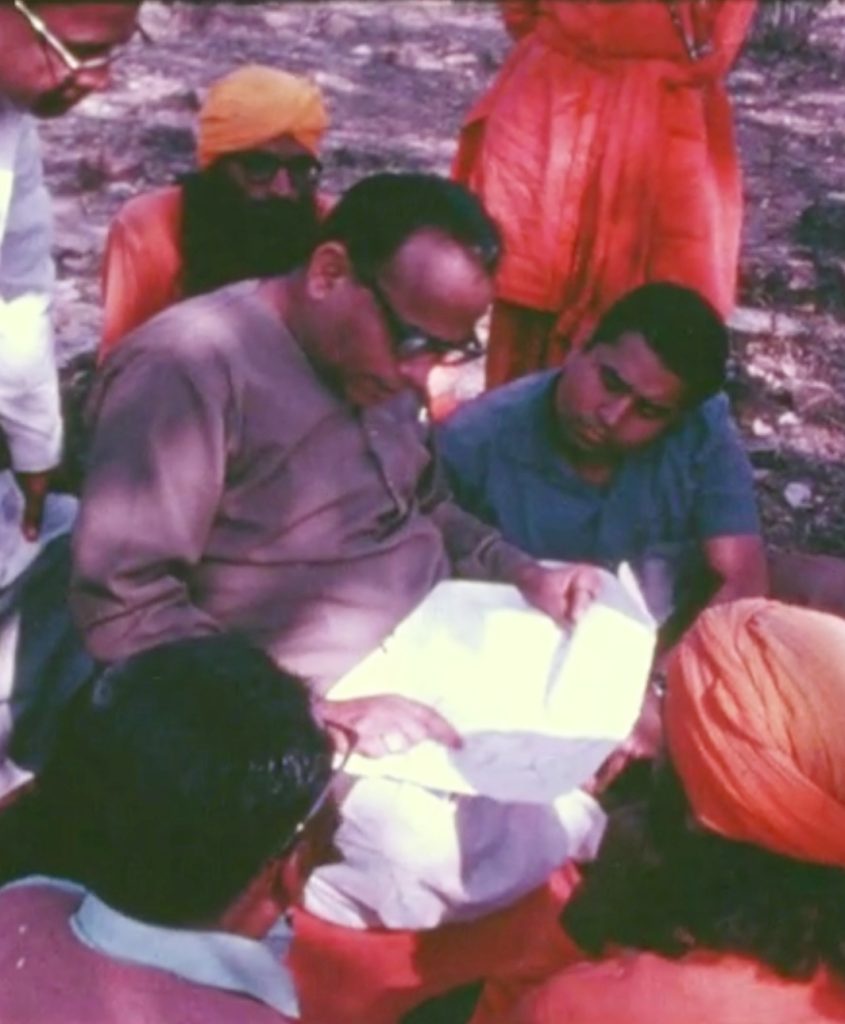
This news is merely a substantiation of one of the many facts Shri P.R. Sarkar revealed during his historical tour of North and East India in 1984. A brief summary of his revelations is as follows
Humans of the pre-Stone Age did not know how to dig wells, so they preferred to live near water sources, especially rivers, and in caves to hide from ferocious animals and protect themselves from biting cold. Cultural traits developed differently depending on the needs and speciality of each river valley. The racial blending, religio-cultural synthesis, philological transformations, changes in scripts, geo-economic mutations, changes in administrative systems, artistic expressions, social values, collective psychology, etc., all bore the imprint of river valleys and their interplay. Shrii P.R. Sarkar explains that civilizations develop along rivers in three stages: the hill stage, the plain stage, and the delta stage. Hill-valley civilizations are the simplest, and deltaic civilizations are the most complex psychologically. This is because maximum blending occurs in the deltaic stage rather than the hill stage.
The history of Indic civilizations is a perfect testimony to this theory. For example, the Gangotri civilization is a hill-stage civilization. At Hardwar, where the Alkananda and Mandakini rivers merge, the hill stage experiences the merger of two simple civilizations, viz., Garhwali and Kumayun, and transforms into a plain-stage civilization. Several civilizations emerge during the plain stage due to the confluence of several river valleys. The river Jamuna, in which other tributaries and branches meet and merge, carries the imprints of several sub-civilizations comprising many customs, usages, manners, etc. The Bundeli sub-civilization emerges due to the blending of the Yamuna and Son rivers. Further, the Yamuna and Ganga merge at Prayag, causing further cultural blending. Later, the Gomati, Rapti, Son, Sarju, Narayani & Buri Gandaki, Lakhandei, Bagmati, Kamala Banan, Koshi rivers, some of which have Mongol-Tantrika influences, merge and involve the Bagheli, Bundeli, Avadhi, Bhojpuri, Magahi, Maithali and Aungika civilizations. These are all plain-stage civilizations. At Maldah, the deltaic stage of the river Ganga starts and the blended Gangotri civilization attains maturity. From Sahebganj to Gangasagar is the Gauriya civilization, and from Prayag to Gandaki is the pre-Gauriya civilization. In the Gauriya civilization, the Brahmaputra brings blending characteristics from the Indo-Tibetan region and influences the Gangetic civilization. Besides, the rivers of Ra’r’h also merge with their several sub-civilizations. The Gauriya civilization emerges as the blending of the Ganga, Brahmaputra and Ra’r’h river valleys takes place.
Ra’r’h is the name given to the oldest undulating land on this earth, which was part of the original Gondwana land, covers portions of North and East India, and stretched to include Africa, the Andamans, Malaysia, Indonesia, the Philippines, and Australia. The Himalayas were born many millions of years after the birth of Ra’r’h. The sand and silt originating from the River Ganges and Brahmaputra gave birth to what we now know as East and North India.
Ra’r’h was not only the starting point and cradle of human civilization but also marked the first steps towards cultural progress, according to Shri P.R. Sarkar. The people of Ra’r’h came into contact with the eternal gospel of the great personality Shiva, who can be considered the first father of human civilization. The Ra’r’h civilization comprises five river valleys, viz., the Suvarnarekha, Kansavati, Dulang, Ajay, Kumari, and Damodar rivers. Ra’r’h was essentially the land of Shaivism since ancient times, and Samskrta was their native language. About 2500 years ago, Mahavira Jain came to Ra’r’h, and his gospel was accepted by the people of western Ra’r’h. However, Jainism had to compromise with the Shiva cult, and Shiva was accepted by Jainism. The worship of large Shiva-liungas and Gaurii-piithas by followers of Jainism is evidence of Jain Shiva. On the eastern side of Ra’r’h, Buddhism had a much greater influence. However, after the Pal dynasty in East Bengal, the people gave up Mahayana Buddhism and embraced Hinduism. They were usually treated as low caste by the Hindu community and so embraced Islam during the Pathan period, except in Chittagong, where the people kept their faith in Hinayani Buddhism. During the middle of the Pathan period, under the influence of Caitanya Mahaprabhu, the entire Jain following in Ra’r’h embraced Mahaprabhu’s Vaishnavism. A Pathan king from the North East, Mu-chang-fa, also embraced Vaishnavism and became known as Vir Bikram Bahadur. The religio-cultural history of Ra’r’h is replete with the blending of different religions. Despite this rich tradition, King Shashanka stands out as a fanatic Shaivite. He was responsible for destroying and disfiguring several non-Shaivite Jain and Buddhist deities in northern and eastern India. Ra’r’h has a rich cultural history and needs deeper study.
There was a period in human history that can be called the Bone Age. Evidence of the Stone Age, Bone Age and Bronze Age can still be found in the Ra’r’h civilizations, especially near Bangurda village, 35 kilometres from Tatanagar. The bones may have been used as tools, implements and weapons until more flexible materials, such as bronze and iron, were developed. Agriculture was invented during the Bronze Age in this area, and those who invented it were called Mahatmas, later called Mahatos.
Shiva was born some 7500 years ago. The cultural heritage of Varanasi/Káshi also goes back 7000 years. It was the winter capital of Lord Shiva. According to P.R.Sarkar, “If excavations are done in and around Varanasi, some ancient relics from Shivás time may still be found and the cultural history of Varanasi will establish the oldest civilization in the annals of recorded human history.” Prayag is, however, one of the oldest cities, but the ancient Prayag was submerged in the floods of the Ganga and Jamuna rivers. Today, Burdwan in West Bengal can be considered the oldest living city in India, with Varanasi the second oldest.
Shri P.R. Sarkar revealed in 1984 that the oldest civilization whose remnants can still be found is the Alonia civilization. The Alania river (near Kota) is a subsidiary of the Chambal River, which is also part of the original Gondwana land and has never been underwater. Pre-Aryan Shiva was the deity of this place. Mohenjodaro and Harappa were destroyed by the Sindh river, but no such destruction occurred in the Chambal valley of Hada desh. Some cave paintings have been found in this valley, and this civilization flourished between 7000 and 5000 years ago. According to Shrii P.R.Sarkar, “no civilization older than Alániá exists today. Chinese civilization is 6000 years old; Indo-Aryan civilization is 5000 years old; and Egyptian civilization is 4500 years old.”
About 4000 years ago, there was a thriving town on the bank of the Ganges near Allahabad. It was called Vrs’n’ipura. It was destroyed by severe floods about 3000-4000 years ago. Between 800 and 1200 years ago, Vrs’n’ipura was destroyed for the second time, killing many people. It took 200-300 years to resettle the people there again. Historically, Vrs’n’ipura was similar to Mohenjodaro. From the Samskrta Vrs’n’ipura 4000 years ago, it became Bishura in Shauraseni Prakrta, Bitthura in demi-Shauraseni 2500 years ago, Bitthura in old Avadhi 1000 years ago, and Bithura in present-day Avadhii, a process of philological metamorphosis covering about 4000 years. The current structures in Bithura are no older than 750 years, although the deities in the temples are older. Shri P.R. Sarkar remarked that if excavations were carried out, the old historical city of Vrs’n’ipura could be found.
During visits to the historical sites in and around Delhi, Shri P.R. Sarkar further revealed the history of the time when Lord Krsna was born around 3500 years ago in Mathura. He also revealed that the city of Indraprastha – the capital of the Pandavas – still lies beneath a mound in the Lodi Gardens. He indicated that Hastinapur – the capital of the Kauravas – was a more beautiful city than Indraprastha. He also pointed out that the Bhairavi cakra, also known as the Star of David, can still be found on the walls of the Purana Quila in Delhi. It is also found in ancient Persia and amongst Aryan relics.
Buddha lived around 2500 years ago, was born in Lumbini, and attained maha-parinirvana (permanent liberation) in Kushinagar. Kushinagar was the capital of the Malla kings, belonging to the Indo-Tibetan tribes. The Mallas ruled the entire Himalayan ranges, plains, and valleys from Sikkim to Garhwal or Uddayan. The Shakyas (ancestors of Buddha) were also descendants of the Mallas. Kushinagar was part of Kashi Rajya. To the east of Kashi Rajya lay Mithila (Videha), and to the west lay Shravastii (East Kaushal). Notably, the first democracy in the world was formed by the Licchavis of Vaeshalii, which was part of Shravastii. According to P.R. Sarkar, “A comprehensive study of this locality which is so closely associated with Buddha, will not only reveal the cultural legacy of Kashi rajya but also a better understanding of its impact on the world culture.” Buddha spoke in Pali (Magadhi Prákrta). Today’s Bhojpuri language (spoken by 40 million people) is the granddaughter of Mágadhi Prákrta and the fifth most widely spoken language after Bam’gla, Telugu, Maráthi and Tamil. A blending of Hinyana and Mahayani Buddhism also took place at Kushinagar. Páli was written in Brahmii script. Later, the blending of Shaevism and Mahayani Buddhism resulted in the Natha cult. Kabir was a Natha Yogii. As Vaeshnavism extended its influence, the influence of Buddhism waned. Buddhism had an extensive religious-cultural impact on Indo-Aryan civilization. Its influence spread to Tibet 400 years after Buddha, when Padmasambhava, the prince of Uddayana or Garhwal-Kumayun, initiated Srrangetsen-Gampo, the powerful king of Tibet, into the Buddhist cult from Bonpassism. Sranget Sen Gampo married Trikuti, the daughter of Anshuvarmam, who was the king of Nepal, and Tenzing, a Chinese princess. Buddhism spread throughout Nepal and China as a result of the influence of these princesses.
Magadha civilization is also a composite river valley civilization that flourished along the Sona, Koyal, Kiul, Ganga and Phalgu rivers. Magadha was the focal point for those who challenged Vedic ritualism and embraced Buddhism, which opposed the Vedic rituals. The soil in Magadha belongs to old Gondwanaland, and its laterite character is ideal for growing roses, papayas, grapes and lemons. Hindus and Muslims share the same cultural, linguistic and racial heritage in this area. Both speak Magahi, have an Austrico-Negroid history, and observe common rituals and traditions. Muslims from Persia who spoke Urdu have adopted a blend of Urdu and Magahi as their language. The intonation of their dialect is like Magahi. Magadhi Prakrit became extinct 2000 years ago, and its two offshoots were eastern or oriental demi-Magadhi (consisting of Assamese, Bengali, Oriya, Angika and Maithili) and western or occidental demi-Magadhi (consisting of Magahi, Bhojpuri, Nagpuria and Chhattisgarhi). Further study of Magadha civilization, as proposed by Shrii P.R. Sarkar, will also reveal the assertion that “Human society is one and indivisible” and that apparent cultural, linguistic and other differences are only part of an ongoing process of transmutation and metamorphosis resulting from interactions among living beings. Transmutation is the result of inherent forces, and metamorphosis is the result of mostly external forces.
Islam was brought to India by Turkish people, who added a new dimension to India’s cultural history. Hindu is a Persian word brought to India by Muslims. Hindus and Muslims share a history, speak a common language, wear similar dress, and are enlivened by the same spirit in their hearts and minds. A proper understanding of cultural similarities and differences should reveal the richness of cultural blending and synthesis and should unite human beings belonging to different groups, but it should never be used to divide human beings for vested interests, as was done by the British in India for imperialist reasons. For example, Mahatma Kabir was highly regarded by Muslims and Hindus alike. A mázár of Mahatma Kabir lies in Gorakhpur. A mausoleum erected in memory of some great person is called a Mázára. In Christianity, churches are consecrated chapels. Certain rituals are observed in Máz’ars. Consecrated mázárs are called Makabara. The architectural style of Kabir’s mázár is Semitic, not Gothic. Semitic architecture is indigenous to the Middle East. Indian temples usually follow one of the four architectural styles:
1. Dravida style found in the temples such as Rameshvaram, Cidambaram, Thiruvandanapuram, Madurai(Minakshi temple).
2. Utkal Style: such as in the temples of Puri and Bhuvaneshvar.
3. Rájvára Style as found in Rajasthan, and in other places in Northern India
4. Gauriya Style: found in the Kálii temple of Kálighát.
At some places, a combination of Tibetan and Rájvára styles can also be seen such as in temples of Kumayun, Garhwal, Kulu Valley, Kangra, etc.
About 1200 years ago, a convention of Brahmins was held in Prayág, now known as Allah-abád, a name that reflects later Muslim influence. During that convention, several groups of Brahmins emerged. Finally, ten groups were accepted, five belonging to Gauriya (North India) and five to Dravida (South India). The Gauriya groups were: Sárasvata Brahmins of Punjab and Kashmir; Kan’yakubja Brahmins of West and East UP; Gaorha Brahmins of South Punjab and Rajasthan; Maethli Brahmins of Mithla; and Nágar Brahmins of Gujarat. Marriage between Northern and Southern groups was prohibited.
The scriptological and linguistic survey of India3 shows that the tie among the recognised tongues of the ancient world was Vedic. The Aryans who came to India spoke a distorted Vedic language, which was blended with Austrico-Negroid-Mongolian tongues and transformed. The later Vedic language was known as Sam’skrta, meaning reformed or repaired. Sam’skrta is of Indian origin. Thus, when Vedic came in contact with the general mass, their language became Rg Vedic Sam’skrta. Both Latin and later laokika Samskrta are the daughters of the old Vedic language and are classical languages. The descendants of Samskrta include: Persian (grandchild of Rg Vedic Samskrta), Pasto, Western Punjabi, Eastern Punjabi, Dogri, Kashmiri, Sindhi, Gujarati, Rajasthani, Nagpuri, Chattisgarhi, Oriya, Magahi, Bhojpurii, Harianavii, Bengali, Assamese, Burmese, Thai, Indonesian and Tagalog (Philippines). Multani is a blend of Punjabi and Sindhi that evolved about 3000 years ago. Samskrta was the language of the original inhabitants of India esp. the natives of the Ra’r’h area. About 4000 years ago, Samskrta was transformed into seven Prakrtas- the peoples’ languages. They were: 1) Mágadhi Prákrta (Eastern India); 2) Shaursenii Prákrta (Northern Central India; Krsna spoke in this language); 3) Paesh’achii Prákrta; 4) Páshcatya-Prákrta ; 5) Saendhavii Prákrta ; 6) Málavii Prákrta and 7) Maharashtrii Prákrta in West India. Most of the present languages of North, Central and Western India are descendants of these Prakrtas, and even the five languages of South India abound in Vedic Samskrta words, even though they were not of Samskrta origin. South Indian languages are of Austrico-Negroid origin, but the scripts are of the Indo-Aryan group. Examples are Telugu and Kannada, which contain about 80% Samskrta words. Malayalam, which is a Austrico-Negroid language, contains 75% Samskrta and Vedic vocabulary. Bengali is a Austrico-Negroid-Mongolian language, but it contains 92% Samskrta vocabulary. The Thai language contains 80% Samskrta words, the Burmese language contains 40% Samskrta words, and the Chinese language has between 2-3% Samskrta words. Punjabi is a direct descendant of the Vedic language- it contains 80% Tadbhava Vedic or distorted Vedic. Due to the close relationship of Punjab with Persia and Turkey, Persian and Turkish vocabulary are also included in Punjabi. Tibetans are ethnically Mongoloids of Indo-Tibetan origin, but their script is Indo-Aryan. The same script is used in Kinnaur and Laddakh. Prákrta were people’s spoken languages and underwent further transmutation over time.
From Magadhii Prákrta came eastern demi-mágadhii and western demi-magadhii. From western demi-mágadhii originated Chattisgarhii, Nagpuria, Bhojpurii, and Magahii. From eastern demi-prákrta originated Asamia, Bengali, Angika, Maethalii, and Oriya. Buddha spoke in Pálii, i.e., Magadhi Prákrta. Palli means village, and Pálli means the language of the village, i.e., the common people’s language.
From Shaursenii came Avadhii, Bundelii, Baghelii, Brajabhás’a, and Hirayánavii. From Harinyavii (which had Persian and Turkish vocabulary) came Urdu, the language of the people who wear vardii or military dress. Hindi has evolved as an offshoot of Hariyanvii.
From Paeshachii Prákrta came Multánii, Eastern Punjabi, Western Punjabi, Pahár’ii (Sirmaurii-dialect of Nahan) and Dogrii.
From Páshcatya came Pashto, Afghánii, Peshavarii, Kashmiri, Tazakii, Kurdiis, and the languages of South Russia.
From Saendhavii Prákrta came Sindhii, Kacchi, Bahicii and Brulii. The last two are Dravidian, not Indo-Aryan, languages.
Several languages emerged from Málavii Prákrta in the east and were spoken in Bhopal, Vidisha, and nearby places, including Gujarati, Kathiavarii, or Saurashtrii. To the western side, Marwarii, Mewarii, Harauti, Dhudhárii and Mewati were spoken.
From Mahárás’t’rii Prakrta came Varad’i spoken in Vidarbha, and Debastha Marathi, spoken in Pune and Konkon.
In ancient times, there were two scripts in India: Brahmii and Kharas’ti. Brahmii was written from right to left and Kharásti from left to right. Later, Kharasti died, and Brahmi bifurcated into two scripts: Sárada (used northwest of Prayag) and Sharada (used in the southwest). These scripts were written from left to right like English. Prayag was the meeting point of the Sharada and Narada scripts. A third script was developed and was known as Kutilá. Since it was developed in Kaushambi, it was also known as Kausambii script. It was also known as Sri Harsha script since the seal of Sri Harsha was written in this script. It was popular east of Allahabad. The Nárada script was also known as the Nágarii script due to the influence of the Nágar Brahmins. Before, Kut’ila used to be the script of the entire eastern portion of India. The scholars of Kashi also wrote in the Kut’ila script, but later, due to the declining influence of Kányakubja Brahmins after the Gupta period, the Nárada began to dominate the Kut’ila script. Ancient inscriptions on copper and stone slabs have been found in the Kutila script. During the Mughal period, Kayasthas wrote their official records in a distorted form of Nágrii. It was popular in eastern UP and Bihar. It also came to be known as the Kayathi script. Bhojpuri was written in this script. Kayathi is closely related to Gujarati. When the United Provinces of Agra and Avadh were consolidated after the merger of Agra, Avadh and Ruhelkhand, Kayathi disappeared from the courts, and Mughal kings replaced it with Urdu. The Sarada script had three branches: Kashmiri Sarada, Dogrii Sarada and Punjabi Sarada. Guru Arjan Deva developed the Gurmukhi script. However, Persian script continued to be popular. Later, the Landei script developed as a distortion of the Punjabi Sarada script and shopkeepers in Punjab and Sind used it until very recently. During ancient times, horoscopes and books were written in Saptasindhu Sarada (Punjabi Sarada). Today, horoscopes are written in Punjabi Sarada and books in Gurmukhi. Asamese and Bengali horoscopes and books were written in the Sriharsha script. Oriya script used to be written on palm leaves with iron pens, so in order to avoid tearing the leaves, it was written in rounded letters. Bengali was, however, written in angular letters. Kashmiri scholars were the first ones to write the ancient Rk Veda and Atharva veda in the Sarada script. The Sarada script is 1300 years old. The Nárada script was used in the south-west of Allahabad up to the Gulf of Kachh, north of Mumbai, and is 800 years old. It was invented by Nagar Brahmins, who started writing Devabhasha, i.e., Samskrta, in Nágrii, and so it was called the Devanágarii script. (Devanágarii script came from Gujarat, not from UP). The Kutila script is used in the east of Allahabad and is used for Bengali, Oriya, Bhojpuri, Maethalii, Angika, etc. Bengali is 1100 years old. Now, it has 12 dialects.
Another significant aspect of the cultural history of ancient India is the use of Bhaeravii Cakra and Swastika. Bheravii Cakra is popularly known as the Star of David and used by Israel in its national flag. The swastika was later used by Hitler and given a negative connotation, but both the symbols are originally from the time of Shiva and part of the Tántric culture of ancient India. They have spread all over the world and have later been absorbed by different cultures and belief systems. They have been found on Viking ships, in old churches and on old forts and temples. The five-pointed star is also found on the walls of Purana Quila in Delhi. It is also found in ancient Persia and amongst Aryan relics.
The so-called tribal people of India have distinct ethnological and linguistic characteristics. Rohtas of the Bhojpuri area belong to the Austric tribe and speak their own dialect as well as Bhojpuri. Tharus who reside in the Bhojpur area of Nepal speak a non-Aryan dialect and Bhojpuri. In Bengal, Munda, Humunda and Uraon speak Bengali as their second mother tongue. Jamatia and Chakma tribes of Tripura and Mizoram also speak Bengali as their second mother tongue. In Ra’r’h, the Singmundas are Austrico-Mongoloids, while Bauris and Dakras generally have Bengali fathers and Austrico-Mongoloid mothers. There is little Negroid influence in the Singhmunda, Bauris and Dakras. Their complexion is not jet-black but light brown, and they speak Bengali as their first language. The Bagdis live in Birbhum, while the Oraon tribe lives in Ranchi and Palamu and belongs to Austrico-negroid or Dravidian race. In Bengal, Oraons were the main tribals, and there has been a blending of the tribal cultures of Tamil, Coorg and Telugu. The Como tribe lives in 24 parganas. Transported tribes live from Ranchi to the Sunderban. The British policy of cultural subversion and tribal dislocation has caused widespread cultural alienation among them. Their cultural specialities must be protected while integrating them into the mainstream of collective life.
This short cultural history of India, as originally narrated by Shrii Sarkar with his omni-telepathic vision, shows that history must not only be confined to the study of the rule of monarchs and kings but must also reflect the weal and woes and hopes & aspirations of the common people. If humanity is to profit from the study of lost history, it must bring out the specialities and noble qualities of even the common people. Such historical analysis will inspire common people to march ahead with confidence and pride in their heritage.
Appendix: A Date-line of India’s Civilizational History
● Birth of Ra’r’h: an ancient cradle of human civilization. root of eastern thought
● Rk-Vedic Age (15,000-12,000 years ago) and the root of western Aryan civilization
● Shivás Advent (5000 BC) & Tantra Yoga-silver lining between east/west Hills stage civilization born at the end of Rk Vedic period and beginning of Yajur Vedic period; Kota- Alonia civilization (finds are older than Indus Valley).
● Post-Rk Vedic period , Composition of Upanishads (2000BC) & Indo-Aryan Exchange
● Mahars’i Kapila (Samkhya)- a little before Krs’na. Born in Patti Jhalda (Anandanagar)
● Krs’nás birth (1500 BC); Plains stage; Atharva Vedic period; Veda Vyas period.
● Panini (520-460BC) & Maharsi Kanad from Gandhar in Afghanistan.Taxila; Rsi Kaushamba
● Buddha and Jain doctrines (500BC ) Magadh spread to Ra’r’h
● Patainjali. ( 300 BC, some say older) Born in Patun village. of Burdwan (Bengal); Canakya 300BC
● Maharsi As’t’avakra 2000 years ago As’t’avakra Samhita (Raja Yoga/Rajadhiráj Yoga)
● Jesus visits Kashmir, and some believe he was introduced to yoga-sadhanas about 2000 years ago.
● Adi Shankaracarya (500 or 788-822CE) Paoranika Dharma introduced caste system;
● Natha Cult; Matsyendranath (8th-9th century), Miinanatha, Gorakshanatha, Gohininatha, Caoranginatha, Mahendranatha, Bhartihari, etc.
● Vasu Gupta (860-925) and Abhinava Gupta (975-1025); Valmiki (7th-8th century).Kashmiri Shaivism tradition.
● Tibetan Yogiis* (9th century onwards) Padama Sambhava, a learned prince of Oddiyana in the 7th century AD, was the first to spread Mahayana Buddhism in Tibet . Kumarayan was a Kashmiri pandit who was invited to China..married a Chinese princess Jiivá and did groundwork practice in Buddhism in Ladhak. He translated scriptures into Chinese, too. His son Kumarjiiva spent most of his life in China. Kadampa School was founded by Atisha Dipamkar (982-1054 AD) based on renunciation & compassion. Atisha was born in Bengal; served as the abbot of the Buddhist university in Vikramshiila and spent his last days in Tibet. Dromtonpa gyalwai Jungue (1004-64) was an eminent disciple of Atisha. The Geluk tradition, in the 14th and 15th centuries (1357-1419), was centred on a monastery founded by Tsongkhapa Lobzang Drakpa. His student Gedun Drup (1391-1474) was the 1st Dalai Lama. The Sakya tradition was introduced by the Indian master Virupa and in Tibet by the charismatic translator Drokmi Lotsawa (993-1077); Kunga Nyingpo (1092-1158); Sakya Pandita (1182-1251); Chogyal Phakpa (1235-80), who was tutor to the Mongol emperor Kublai Khan. The Kagyu tradition: Mahasiddha Tilopa (988-1069); Naropa (1016/1060-1100); Marpa (1012-1097); Jetsun Milarepa (1040-1123); Karmapa Dusum Khyenpa (1110-1193). Other Tibetan lineages include: Shangpa Kagyu; Chod (Yoginii Machik Labdron, 1055-1153); Shije; Kalacakra; Urgyen Nyendrub; Siddha Urgyenpa (1230-1309) have survived. 6th Dalai Lama Tsang Yang Gyatso. China invaded Tibet on June 25th, 1950. The extraordinary life of Khyentse Rinpoche ended on 28th Sept. 1991. Currently, the 14th Dalai Lama is: Tenzin Gyatso
● Hatha Yoga Pradipika (15th century) by Swatmarama, a disciple of Gorakhnatha.
● Kabir (spiritual poet); Trailanga Swami & Totapuri –naga sanyasiins 17th century-20th century. Siddhas who lived for over 250 years.
● Babaji, Lahiri Mahasaya, Sri Yukteshvarji, Ramakrishna, Meher Babaji, Vishuddhanandaji, Anandamayii Ma, Pt.Gopinath Kavirajji; Prabhupáda Bhaktivedanta ,Vivekananda, Sri Krishnamacaryaj(1888-1991); Swami Shivananda, Swami Satchiddananda, Raman Maharsi, Swami Muktananda & many others.
● Life of Mahakaula Shrii Shrii Anandamurtiiji (1922-1990) Delta-stage civilization- Jamalpur phase; Trips to the Philippines, Anandanagar phase; Ranchi phase, Patna phase, World Travels, Travels in India to many historical sites. Anandanagar/Kolkata phase. His yogic contributions included: A New Philosophical Treatise (Ananda Sutram), Scientific Meditation systems, Guided Yoga-Asanas & Therapy system, Yogic Dances, especially Kaoshikii, Prabhat Samgiita, Sixteen Points, Kapalika Sadhana, Vishesha Yoga, Madhur Sadhana, Avarta Kiirtan, Avadhuta cult, Guidance on Diet & Dealings, etc. He created a global organisation with thousands of whole-time workers from over 70 countries. His exemplary disciples included Abhedananda, Amitananda, Asiimananda, Divyananda, Dada Gagan, Dineshvarananda, Samanvayananda, Vijayananda, Raghunathji, Rudreshvarananda, Chandranathji, Naginaji, Dashrathji, Ananda Bharati didi, Ananda Diipanvita, Ananda Sukriti, Ananda Supriti, Vratadhirananda and hundreds of other sanyasiins & householders who devoted and sacrificed their lives for the establishment of a universal ideology.
● Unlike past civilizations, which led to physical clashes & brought about resultant biological & social transformations in the physical realm, the future evolution of human society is likely to be more marked by psychic-metamorphosis & spiritual evolution. Shrii Shrii Anandamurtiiji predicted the advent of a Sadvipra-society led by benevolent individuals. Yoga is likely to contribute towards this golden future of the human race.
Notes
1. “Drowned Indian city could be world’s oldest,” E. Young, New Scientist, 18.1.2002. https://newscientist.com/article/dn1808-drowned-indian-city-could-be-worlds-oldest/
2. Lost city ‘could rewrite history’, T. Hudson, BBC Online News. http://news.bbc.co.uk/2/hi/south_asia/1768109.stm
3. “A Scriptological and Linguistic Survey of the World”, P.R. Sarkar, Discourses on Neohumanist Education, Ananda Marga Publications (1989).
Published in Neohumanist Review, 2/2026 • Issue 7, pp 34-39 ... 73-75.